
Development update
A More Flexible Dungeon Generator: Backtracking, Staged Builds and Prebuilt Rooms
We’re improving how dungeon layouts recover from dead ends and spreading their construction across stages, while beginning to integrate manually designed Packed Rooms. Here’s what’s ready—and what still needs testing.
01 · Devlog
More reliable layouts
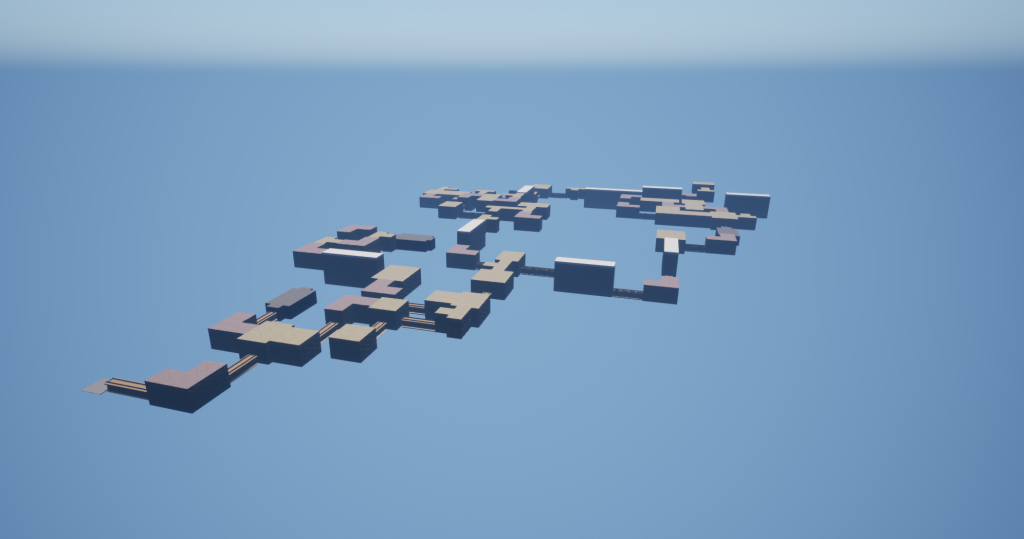
Larger or more complex dungeons can expose problems that are hard to encounter in smaller runs: Rooms running out of valid connections, Hubs or Stairwells failing to find a suitable position, corridors crossing one another, or a corridor passing through a Room instead of its doorway.
We’ve strengthened the checks used before accepting a layout. If the generator detects a corridor crossing or an overlap, it can reject that arrangement and try another one rather than keeping an invalid result.
Earlier generation runs from 5 to 70 Rooms have produced encouraging results. However, repeatable fixed-seed checks for larger Adaptive Floors and multi-floor configurations are still part of the validation work. We’re treating those as ongoing tests, not as a blanket guarantee that every large layout is already verified.
02 · Devlog
Recovering from a dead end
We’ve added local backtracking for situations where the generator runs out of valid connections.
Instead of discarding the whole layout, it can temporarily remove up to two recently placed Normal Rooms, release their connections and corridors, and try another arrangement for a Hub or Key Room. The removed Normal Rooms are then restored so the generator can preserve the requested total.
New debug messages also help us understand why a retry happened, which Rooms were temporarily removed, how many backtracking steps were used and how long each attempt took.
03 · Devlog
Building the dungeon in stages
The generator now has staged-generation options that separate planning from visual construction.
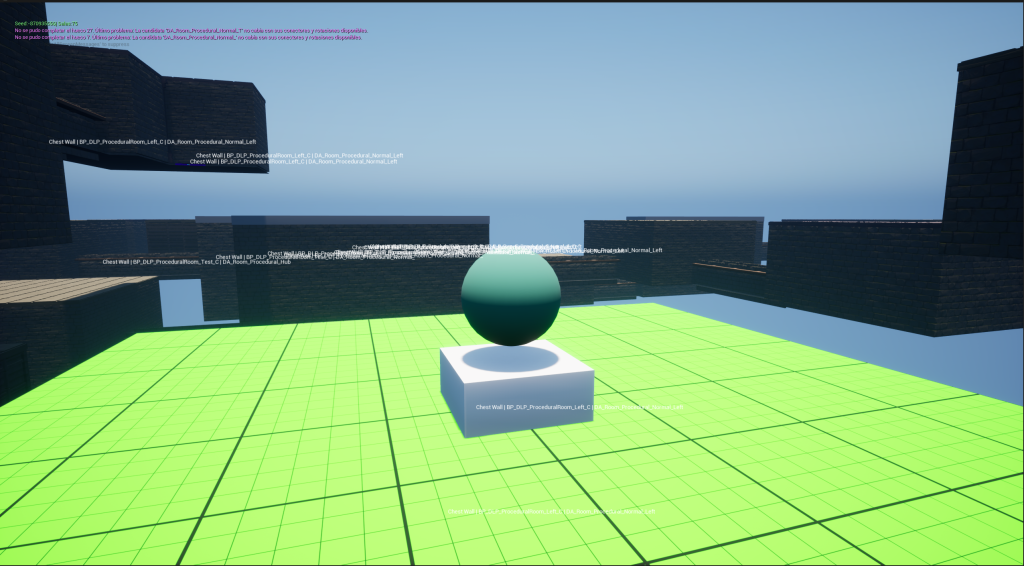
First, it plans and validates the dungeon layout. Once the arrangement has been accepted, the presentation—such as corridors, Rooms, door frames and gameplay elements—can be built progressively across frames.
The initial test settings use a time budget of approximately 6 ms and a maximum of 4 staged items per frame. These are starting values for testing, not a promise of a measured performance improvement. We still need to compare the staged path in Unreal and verify how it affects freezes and frame-time spikes in larger generations.
04 · Devlog
Bringing in prebuilt Rooms
We’ve also begun integrating manually designed Rooms built as Packed Level Actors.
The early Dungeon Blueprint Forge Packed Room setup is intended to let a Room provide its visual presentation while keeping its exits, rotations, bounds and gameplay markers available to the generator. A lightweight logical representation can be used while the layout is being planned; the heavier visual Room is added after the layout has been accepted.
Room bounds can be authored manually for unusual shapes, or generated automatically from the Room geometry. The current approach can create multiple bounds to better represent shapes such as L- and T-shaped Rooms, instead of treating every Room as one oversized rectangle.
This integration is still being tested. We need to verify that the bounds fit the visuals, that Rooms do not overlap, and that a prebuilt Room with two exits works correctly as an intermediate Room.
05 · Devlog
Keeping gameplay in the right place
The dungeon-generation plugin remains separate from the game’s specific combat and gameplay systems. It can provide Room categories and marker locations, while the main game project decides how to use them—for enemies, loot or other encounters.
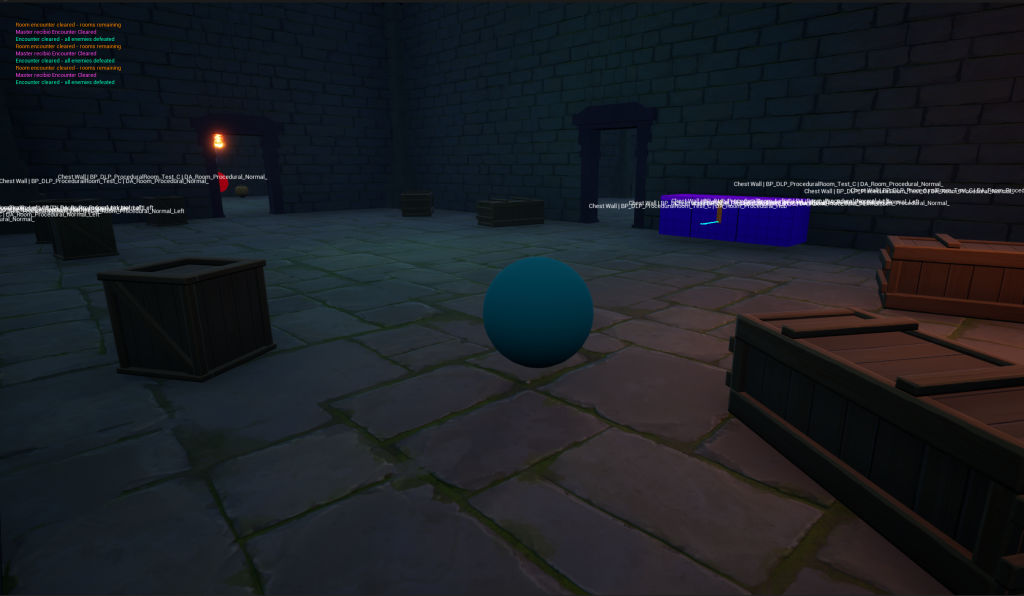
One issue we’ve identified is that some enemies can use a Room’s origin as their spawn point and end up inside the floor. Using dedicated markers such as EnemySpawn is the intended solution, but it still needs visual validation in the game.
06 · Devlog
What we still need to test
The current development report records successful Editor and game Development builds. The next checks focus on how the new pieces behave together:
Verify automatic bounds on L- and T-shaped Rooms.
Confirm that large seeded layouts remain free of Room and corridor overlaps.
Test a prebuilt Room with two exits as an intermediate Room.
Check exit-arrow placement and orientation.
Validate enemy markers and spawn height in the game.
Measure whether staged generation reduces visible stalls in practice.
The foundation is becoming more flexible, but we still have important visual and gameplay checks ahead. Each round of testing helps us make the Chaos Spire’s procedural layouts more dependable—and prepares the generator to combine procedural layouts with Rooms designed by hand.
Better recovery, clearer construction stages, and hand-built Rooms: the dungeon generator is taking its next step.